People in India search for "agentic AI" a lot, often as agentic AI kya hai. The term is used loosely in sales pitches, so it's worth pinning down what it means and what it doesn't.
The short answer
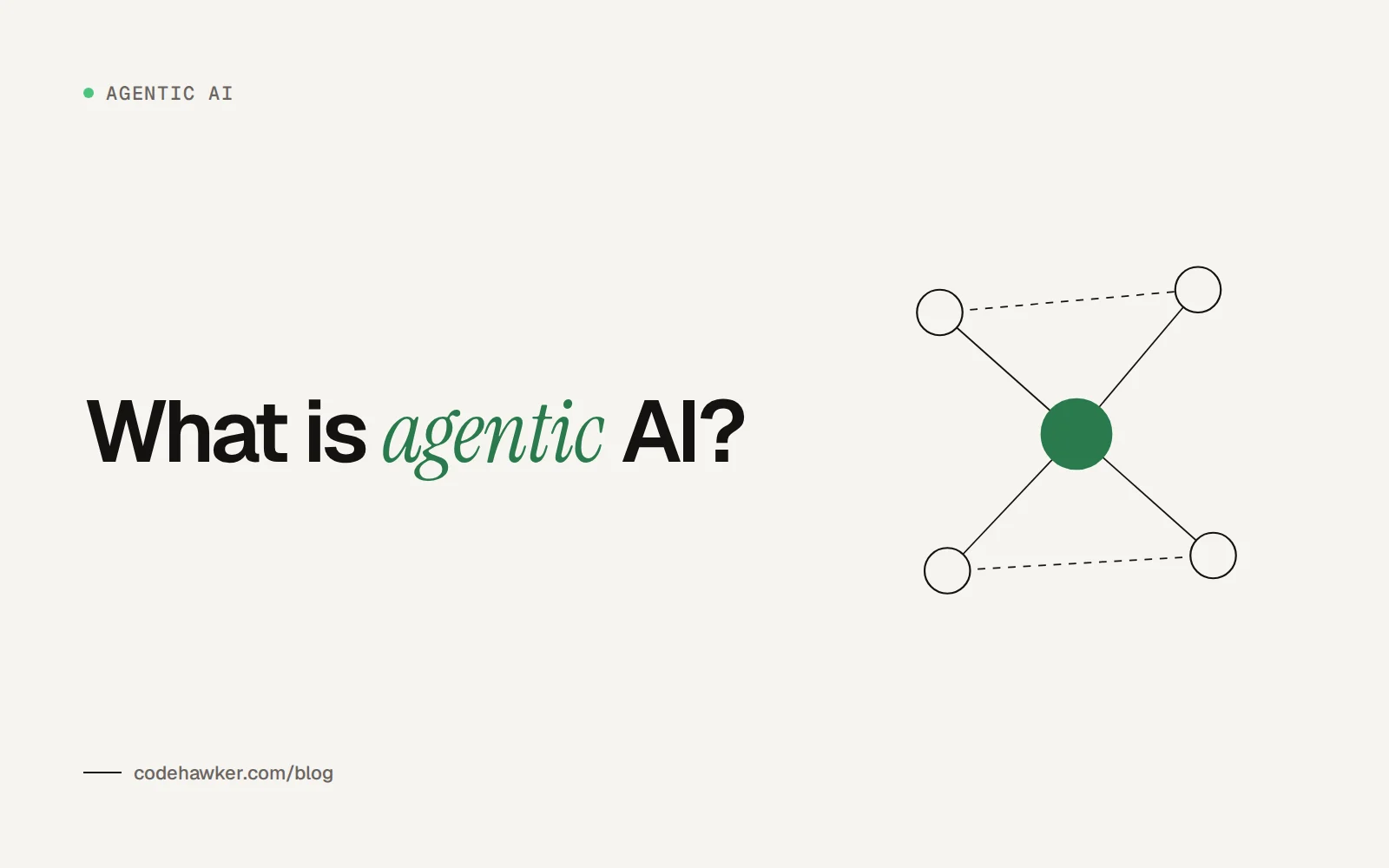
Agentic AI is AI that can take actions towards a goal, not just produce text. You give it an outcome ("make sure every enquiry gets a reply and a booking offer within five minutes"), access to some tools (your WhatsApp Business number, your calendar, a Google Sheet), and rules. It then works out the steps and carries them out.
A regular AI assistant, like the free version of ChatGPT, gives you an answer and stops. You still copy the answer somewhere and do the next step yourself. An agent does the next step.
A chatbot and an agent, side by side
Take a dental clinic receiving a WhatsApp message at 9:40 pm: "Do you have anything tomorrow evening for a cleaning?"
| A basic chatbot | An AI agent | |
|---|---|---|
| Understands the question | Yes | Yes |
| Replies with timings | Yes, from a fixed list | Yes, from the live calendar |
| Books the slot | No: "Please call the clinic" | Yes, in the clinic's calendar |
| Sends a reminder next day | No | Yes |
| Notices the patient is overdue for a check-up | No | Can flag it to the front desk, if allowed |
The agent is doing the same work a good receptionist does after hours. That's the attraction. It also means the agent is touching real systems, and a mistake now has consequences: a double booking, a reminder sent to the wrong person.
We cover the difference in more depth in AI agent or chatbot.
What an agent is made of
Under the marketing, most business agents have four parts:
- A language model (the "brain"), the same kind of model that powers ChatGPT, Gemini or Claude. It reads the message and decides what to do next.
- Tools: connections that let it act. "Check calendar", "create booking", "send WhatsApp template", "add row to sheet".
- Instructions and limits: what it may do on its own and what it must hand to a person.
- Memory and logs: what it remembers about a conversation, and a record of every action it took.
When someone sells you an "AI agent", these are the four things to ask about. If they can't explain the third and fourth clearly, be careful.
Where agents make sense for a small business
Agents earn their keep on tasks that are frequent, multi-step and rule-based, where speed matters:
- Replying to enquiries and offering bookings, outside office hours too
- Chasing unpaid invoices with polite, escalating reminders
- Turning WhatsApp orders into entries in your order sheet or billing software
- Collecting documents from clients (a CA firm's monthly bank statement chase is a good example)
- Rescheduling and reminding, which cuts no-shows
They make less sense where every case is different, where the stakes per decision are high, or where volume is so low that a person handles it in ten minutes a day.
The risks, in plain terms
Agentic AI raises different questions from a chatbot because it acts:
- Wrong actions. Language models occasionally misread a message. An agent that misreads "cancel" as "confirm" causes real trouble. Good setups confirm important actions back to the customer.
- Too much access. An agent that only needs to book appointments shouldn't be able to see your bank account. Give it the minimum.
- Customer data. An agent that handles names, phone numbers or health details is processing personal data, which comes under India's data protection law. The Digital Personal Data Protection Act, 2023 is law, and its Rules were notified in November 2025. Most duties for businesses (notice, consent, security, breach reporting) apply from May 2027. See our DPDP Act guide for small businesses.
- No one watching. The most common failure is not a dramatic one. It is an agent quietly giving slightly wrong answers for weeks because nobody reads the logs.
The fix for all four is the same idea: small actions alone, important actions approved by a person, everything logged. The approach has a name, human in the loop.
What it costs
Costs vary widely with what the agent connects to and how many conversations it handles. There's usually a one-time setup fee plus monthly running costs: the AI model's usage, WhatsApp message charges and monitoring. Meta charges per delivered template message on the WhatsApp Business Platform, with marketing messages costing far more than utility or login messages. Our AI cost guide for Indian businesses breaks this down, and our own agent pricing is published openly.
Checklist: before you let an AI agent act for you
- Name the one outcome you want (e.g. "every enquiry answered within 5 minutes")
- List the tools it needs access to, and nothing more
- Decide which actions it can take alone and which need your approval
- Ask how every action is logged and who reads the log weekly
- Confirm how to pause or switch it off in one step
- Check how customer data is stored and for how long
Agentic AI is genuinely useful when it's pointed at the right task and given sensible limits. If you'd like to see how agents are built for appointment-based businesses, our AI agents service page walks through how a typical setup works.